
Monero Mining Hardware for Sale
A Monero miner is hardware designed to mine Monero (XMR) using the RandomX proof-of-work algorithm, which was created to favor general-purpose CPUs and resist centralization by large ASIC farms. RandomX relies heavily on memory latency, cache performance, and general instruction execution rather than pure hashing power, making high-performance CPUs and a small number of specialized ASIC-style accelerators the dominant tools for Monero mining. This design keeps Monero mining more decentralized and accessible compared to algorithms such as SHA-256 or Scrypt.
Monero mining focuses on privacy-preserving transactions and censorship resistance, which is why many miners choose to participate even when short-term profitability is not the only goal. Mining XMR is commonly done through CPU rigs, small clusters, or purpose-built RandomX miners, and it is well suited for home miners, private setups, and distributed mining operations. Because RandomX is optimized for CPUs, power efficiency, cooling, and memory bandwidth are far more important than raw electrical throughput.
In real-world deployments, Monero miners are often configured for quiet, low-profile operation, making them compatible with residential environments, office spaces, or distributed hosting. Instead of large single machines, many Monero miners run multiple optimized CPU systems or compact RandomX appliances to build aggregate hashrate. Mining pools are commonly used to reduce reward variance and provide steady payouts.
From a strategic perspective, Monero mining appeals to miners who value privacy, decentralization, and network resilience. Hardware choices are evaluated on hashes per watt, memory performance, and long-term reliability rather than industrial-scale throughput. This makes Monero one of the few major cryptocurrencies where individuals can still meaningfully participate in mining without data-center infrastructure.
-
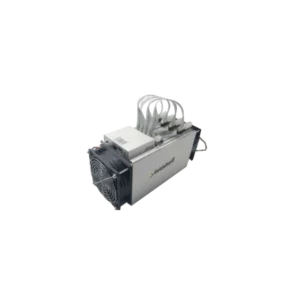
 Select options This product has multiple variants. The options may be chosen on the product page
 212.00 kH/s
Bitmain Antminer X5 Monero Miner 212K
US$3,199.00 -
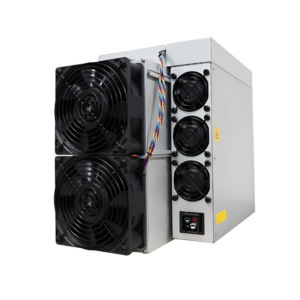
Select options This product has multiple variants. The options may be chosen on the product page
1.00 MH/s
Bitmain Antminer X9 Monero Miner 1M
US$5,600.00

FAQs
-
Does BT-MINERS offer Monero-ready hardware?
Yes. BT-MINERS offers machines and components suited to RandomX mining, with global shipping and manufacturer warranty coverage.
-
Can I mine Monero at home?
Yes. XMR is one of the most home-friendly coins to mine because it runs well on standard PC hardware and does not require loud ASICs.
-
How much power does a Monero rig use?
Power draw varies by CPU choice, typically 200W to 500W per machine. Multi-node setups scale linearly with the number of machines.
-
Does Monero resist ASICs by design?
Yes. Monero has updated its algorithm multiple times to preserve ASIC resistance, making CPU mining the main competitive path.
-
What wallet do I need for XMR?
Use an official Monero wallet such as the GUI wallet, CLI wallet, Cake Wallet, Feather Wallet, or a reputable hardware wallet with XMR support.
-
Which pools support Monero mining?
Popular pools include SupportXMR, Nanopool, MoneroOcean, C3Pool, and HeroMiners. Compare fees and payout thresholds before joining.
-
Is Monero mining profitable?
Profitability depends on XMR price, network difficulty, and electricity cost. Use a RandomX calculator to estimate daily returns.
-
Which CPUs mine Monero best?
High-core-count server CPUs with large L3 cache, such as AMD EPYC and Ryzen Threadripper, tend to deliver the strongest XMR hashrates.
-
Can I mine Monero with a GPU?
GPUs are not efficient for RandomX. CPUs with large caches outperform GPUs and are the standard choice for XMR mining.
-
What algorithm does Monero use?
Monero uses RandomX, a CPU-friendly proof-of-work algorithm engineered to resist ASIC dominance and keep mining accessible.