Dogecoin and LTC Mining Hardware for Sale
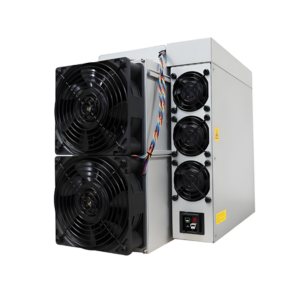
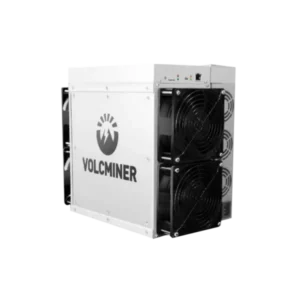
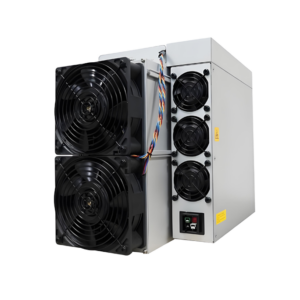
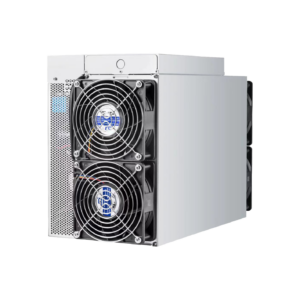
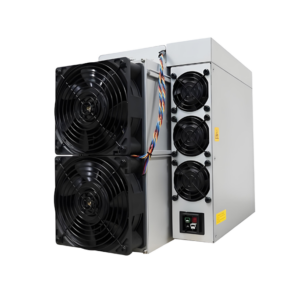
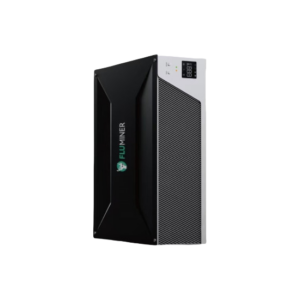
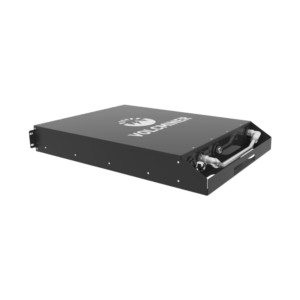
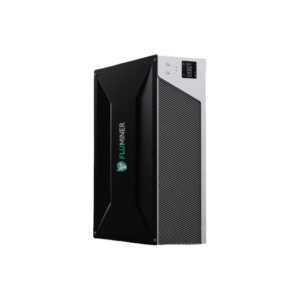
Dogecoin and Litecoin use Scrypt and may be merge-mined through pools that support the relevant configuration and payout terms. Exact rewards, fees and credited coins depend on the selected pool and current network conditions. Matching the algorithm alone does not prove pool support, profitability or payback. Current Scrypt ASICs worth considering: Bitmain Antminer L7 (8.8-9.5 GH/s at ~3,260W, 0.36 J/MH) as the value buy, Antminer L9 (16-17 GH/s at ~3,570W, roughly half the J/MH of the L7) as the efficiency leader, ElphaPex DG1 and DG1+ competing directly with the L9, VolcMiner D1 and D1 Pro as newer farm-scale options, Fluminer L1 and L1 Pro for quieter home use, and Goldshell LT Lite, LT6, and Mini-DOGE for genuine home-friendly setups.
Before ordering, line up the real inputs. Industrial units (L7, L9, DG1+, D1 Pro) need 220-240V and run 75-80 dB, which means a shed, garage, or dedicated mining room. Home units (LT Lite, Mini-DOGE, D1 Mini, Fluminer L1) accept universal 110-240V input at 35-55 dB.
Pool support and merged-mining terms can change. Verify current documentation for the exact pool, network, payout addresses, fees and credited coins before connecting. Estimate profitability with current hashrate, wall power, network difficulty and rewards, coin prices, pool fees, uptime, electricity, cooling or hosting, taxes and other costs. Availability, included items, condition and warranty vary by exact product and batch; confirm them in writing before payment. Returns and payback are not guaranteed.
Antminer L9 and L11 model map
Choose the exact model page because hashrate, power, voltage and cooling are not interchangeable:
Antminer L11 20 GH/s
Antminer L11 Pro 21 GH/s
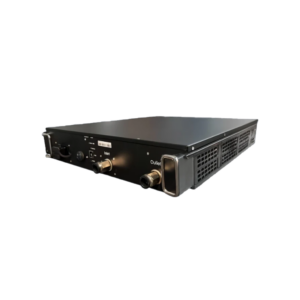
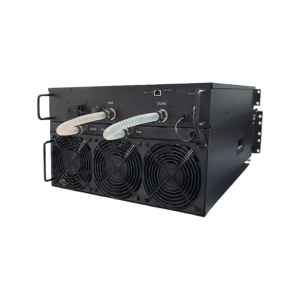
Antminer L11 HU6 33 GH/s hydro
Antminer L11 Hyd 2U 35 GH/s
Antminer L9 air-cooled variants
Antminer L9 Hyd 2U 27 GH/s
Pool support, merged-mining rewards, profitability and payback depend on current pool terms, networks and operating-cost inputs; they are not guaranteed.
Compare Scrypt miner families
Use the Antminer L11 series guide for generic L11 research, the Antminer L9 profitability method for scenario planning, and the Litecoin and Dogecoin mining calculator for estimates with current inputs.
FAQs
-
Do I mine DOGE and LTC directly, or through Litecoin?
Through merge mining. Your Scrypt miner points at a merge-mining pool and earns both DOGE and LTC on the same hashrate, with no extra power draw.
-
Which Dogecoin and LTC miner is the best buy right now?
For efficiency, the Antminer L9 and ElphaPex DG1+ lead. For value, the L7 is hard to beat. For quiet home setups, Goldshell LT6 and Fluminer L1 are the picks.
-
What's the difference between an L7 and an L9?
The L9 roughly doubles the L7’s hashrate and nearly halves the J/MH. It costs more upfront but earns more at any electricity rate above about US$0.05/kWh.
-
Can I really mine DOGE and LTC at home?
Yes. Compact Scrypt units like the Goldshell LT Lite, Goldshell Mini-DOGE, VolcMiner D1 Mini, and Fluminer L1 are designed for home circuits and run quieter.
-
Which pools support DOGE and LTC merge mining?
LitecoinPool, ViaBTC, F2Pool, Antpool, and Prohashing are the main options. Confirm the pool supports merged AuxPoW before pointing your miner.
-
What power supply do I need?
Most modern Scrypt ASICs draw 2,000-3,600W and need 220-240V. Home-scale units (Mini-DOGE, LT Lite, D1 Mini, Fluminer L1) work on 110-240V universal input.
-
Are GPUs competitive for Dogecoin and LTC?
No. Scrypt ASICs outperform GPUs by orders of magnitude. GPU mining for DOGE hasn’t been viable for years.
-
What DOGE and LTC wallet should I use?
The official Dogecoin Core wallet, or any exchange or multi-coin wallet with a valid DOGE receive address. Use a wallet you control, not an exchange address.
-
Is Dogecoin and LTC mining still profitable?
At average US electricity rates, efficient Scrypt miners stay profitable through most market conditions because you earn DOGE plus LTC on one rig. Run a current Scrypt calculator before buying.
-
Does BT-MINERS offer warranty on DOGE and LTC miners?
Yes. New Scrypt miners from BT-MINERS come with manufacturer warranty, typically 180-365 days depending on brand and model.