Kaspa Mining Hardware for Sale
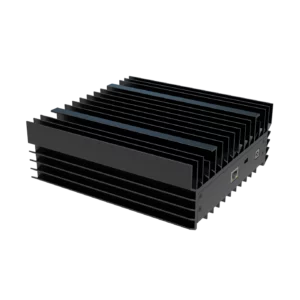
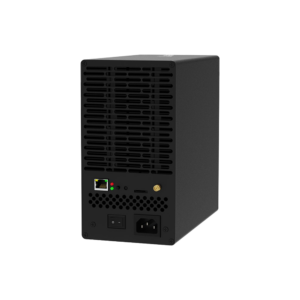
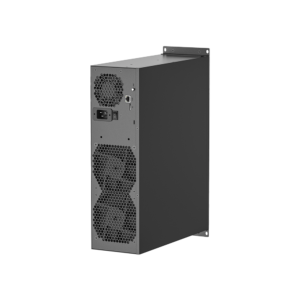
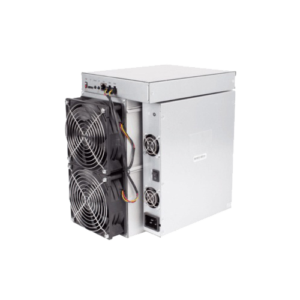
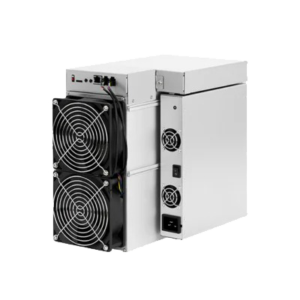
Kaspa runs on KHeavyHash, a proof-of-work algorithm built for the network's BlockDAG architecture and one-second block times. KAS mining moved from GPU-dominant to ASIC-dominant almost overnight when IceRiver launched the first KHeavyHash ASIC, and the category has evolved quickly since. Three manufacturers make current KAS hardware. Bitmain's Antminer KS series covers the KS3 (8.3 TH/s), KS5 (20 TH/s at 150 J/T), KS5 Pro (21 TH/s), and KS7 (40 TH/s), which leads the category on raw hashrate.
IceRiver's KS series spans the KS0 Ultra (400 GH/s at 100W, a true home miner), KS2 Lite, KS5M, and KS7 Lite (4.2 TH/s at 500W, 119 J/T), plus larger farm units. Goldshell's KA Box and KA Box Pro (1.6 TH/s at 600W) target quieter home and small-farm deployments. VolcMiner is a Scrypt-only manufacturer and does not make KAS hardware. KAS ASICs span the full power and noise range. Home miners gravitate toward the IceRiver KS0 Ultra, KS7 Lite, or Goldshell KA Box. Small and mid-size farms run Antminer KS5 and KS5 Pro. Industrial operators deploy KS7 units.
Pool support is broad: F2Pool, HeroMiners, WoolyPooly, and 2Miners all maintain Kaspa pools. Wallet options include the Kaspa web wallet, Kasware browser extension, and KDX desktop wallet, with Ledger integration available for cold storage. Firmware updates matter because Kaspa protocol changes continue to roll out. Keep miners on stable current firmware and watch for pool announcements. Profitability tracks KAS price, network hashrate, and electricity rate. Each new ASIC generation resets the competitive baseline, so efficiency tiers matter more on KAS than on some older algorithms. BT-MINERS stocks Bitmain, IceRiver, and Goldshell KAS hardware with warranty and tested inventory.
FAQs
-
What algorithm does Kaspa use?
KHeavyHash, built for the Kaspa BlockDAG network’s fast block times. Dedicated ASICs dominate the network.
-
Which ASICs mine Kaspa?
Bitmain (Antminer KS3, KS5, KS5 Pro, KS7), IceRiver (KS0 Ultra, KS2 Lite, KS5M, KS7 Lite, and larger units), and Goldshell (KA Box, KA Box Pro) are the three active manufacturers.
-
Which KAS miner is the best buy?
For raw hashrate, the Antminer KS7. For efficiency, the IceRiver KS7 Lite at 119 J/T. For quiet home use, the KS0 Ultra at 100W or the Goldshell KA Box.
-
Can I still mine Kaspa with a GPU?
No. KHeavyHash ASICs outperform GPUs on a per-watt basis by a wide margin. GPU Kaspa mining isn’t competitive.
-
How much power does a KAS miner use?
From 100W on the IceRiver KS0 Ultra to about 3,500W on the Antminer KS7. Most small-farm units sit at 1,500-3,000W.
-
Which pools support Kaspa?
F2Pool, HeroMiners, WoolyPooly, and 2Miners are the main options. Kaspa protocol changes occasionally require firmware and pool updates.
-
What wallet do I need for Kaspa?
The Kaspa web wallet, Kasware browser extension, KDX desktop wallet, or a compatible Ledger setup for cold storage.
-
Is Kaspa mining profitable?
Tracks KAS price, network hashrate, and electricity rate. Each new ASIC generation resets the competitive baseline, so efficiency tiers matter more on KAS than on some older algorithms.
-
Does BT-MINERS ship Kaspa miners internationally?
Yes. Bitmain, IceRiver, and Goldshell KAS hardware ships globally with tracked courier service and customs support.