
Immersion cooling Mining Hardware for Sale
Immersion-cooled miners run fully submerged in non-conductive dielectric fluid. Heat transfers directly from the chips into the surrounding coolant, which eliminates airflow, dust, and oxidation issues in one move. That makes immersion one of the most effective paths to high density, quiet operation, and extended hardware lifespan, at the cost of more complex site preparation.
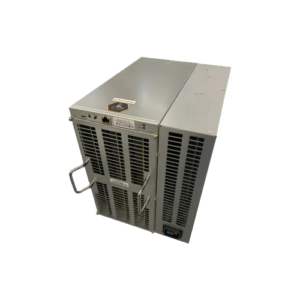
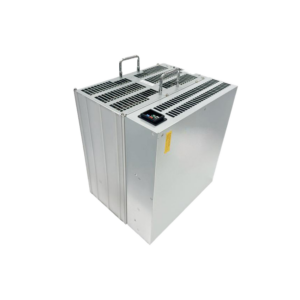
What gets deployed in immersion: Bitmain Antminer S19 Pro and S21 series in immersion-ready configurations, MicroBT Whatsminer M53/M56/M60 series tuned for dielectric fluid, Bitdeer Sealminer A2 immersion variants, and select Canaan Avalon units. Immersion-ready models typically have fans removed at factory, reinforced gaskets, and firmware profiles tuned for fluid-rated thermal curves. Retrofitting air-cooled miners is possible but voids most manufacturer warranties, so factory-certified immersion SKUs are the safer procurement path. Coolant choices split into two camps. Single-phase synthetic hydrocarbons (Shell Diala, Castrol, ENGINEERED Fluids ElectroCool) are cheaper, widely available, and non-hazardous but need active circulation. Two-phase fluorocarbons (3M Novec) boil and condense to move heat with less pumping, but the fluids are expensive and face regulatory pressure in several jurisdictions. Single-phase dominates current deployments.
Practical considerations: floor load capacity, fluid storage and handling, spill containment, fire safety codes appropriate to the chosen coolant, and a heat rejection system (dry cooler, cooling tower, or district-heat integration) sized to total thermal load. Industrial voltage typically runs 240-480V with mining-grade PDUs. The payoff is meaningful: reported hashrate increases of 15-25% over air-cooled at the same silicon, plus dramatically lower failure rates over multi-year operation. BT-MINERS stocks immersion-ready ASICs from Bitmain, MicroBT, and Bitdeer, and can advise on complete tank, coolant, and heat-rejection builds for greenfield or retrofit deployments.
FAQs
-
What is an immersion-cooled miner?
An ASIC miner running submerged in non-conductive dielectric fluid, which absorbs heat directly from the chips and transfers it to an external heat exchanger.
-
Is immersion cooling safe for electronics?
Yes. Dielectric fluids are electrically non-conductive and chemically stable. Properly specced fluid cools powered electronics without damage.
-
What coolant should I use?
Single-phase synthetic hydrocarbons dominate current deployments for cost and availability. Two-phase fluorocarbons offer higher density cooling but cost significantly more.
-
Do I need to modify my miner for immersion?
Factory immersion-ready models are the safer path. Retrofitting air-cooled miners often voids warranty. Remove fans, upgrade gaskets, and apply immersion firmware if you retrofit.
-
How much more hashrate do I get?
Typically 15-25% above air-cooled at the same silicon, with significantly lower failure rates over multi-year operation.
-
Is immersion quieter than air cooling?
Yes. Without internal fans, miner noise drops to near-silent. The only audible components are external pumps and heat-rejection equipment.
-
Can waste heat be recovered?
Yes. Heated coolant cycles through heat exchangers and can feed space heating, greenhouses, aquaculture, or industrial hot-water loops.
-
What is the upfront cost of immersion?
Varies widely with tank size, coolant volume, and heat-rejection hardware. Small-scale builds start in the low five figures; container-class systems run into six. BT-MINERS can quote turnkey options.
-
Does immersion void the miner warranty?
For factory immersion-ready models, warranty applies normally. Retrofitting a standard air-cooled miner usually voids coverage.
-
Which miners are best in immersion?
SHA-256 flagships from Bitmain, MicroBT, and Bitdeer see the most immersion deployment. Scrypt and KHeavyHash immersion builds also exist but at smaller scale.